

How Far Should Shingles Overhang Drip Edge? (A Proper Installation Guide)

You are likely asking, "How far should shingles overhang drip edge?" because you are either up on a ladder with a tape measure right now, or you have noticed water dripping behind your gutters during the last storm.
Have you ever stood outside in a rainstorm and watched how the water comes off your roof? It’s probably not something most Villa Ridge homeowners do for fun.
But that moment when water leaves your shingles and hits the gutter is actually one of the most critical "hand-offs" in your entire home’s defense system.
At Utz Roofing, we often tell our clients that roofing is a game of inches—sometimes, fractions of an inch. While the shingles in the middle of your roof get all the glory, the real work happens at the edges.
That small extension of shingle that hangs over your roof deck the shingle overhang is the only thing stopping water from wicking back into your wood or blown-off shingles landing in your yard during the next Missouri storm.
The Cheat Sheet: How Far Should Shingles Overhang?
Let’s cut right to the chase. You are likely here because you’re up on a ladder (or planning to be) and you need the magic number.
How far should shingles overhang the drip edge? If you get this wrong, you’re inviting rot or wind damage. Here is the industry standard we stick to, which aligns with guidelines from major manufacturers like Owens Corning:
| Roof Location | Overhang With Drip Edge | Overhang Without Drip Edge |
|---|---|---|
| Eaves (Gutter Edge) | 1/4 inch to 3/4 inch | 1/2 inch to 3/4 inch |
| Rakes (Gable/Side Edge) | 1/4 inch to 3/8 inch | 1/2 inch to 3/4 inch |
Pro Tip: If you are installing a new roof today, there is almost no good reason to go "without a drip edge." It is a small investment that saves huge headaches later.
Why Does Overhang Distance Matter?
You might be thinking, "Is a quarter of an inch really going to destroy my house?" The short answer? Over time, yes. To understand why, we have to look at the physics of water and wind.
The "Teapot Effect" (Surface Tension)
Water is sticky. Due to a phenomenon called surface tension, water likes to cling to surfaces and curl back underneath them rather than dropping straight down—just like tea dribbling down the spout of a teapot if you pour it too slowly.
If your shingle overhang is too short, the water won't release cleanly into the gutter. Instead, it will dribble back underneath the shingle, run down your fascia board, and eventually rot out your soffits. It’s a slow leak that you won’t notice until the paint starts peeling or the wood turns to mush.
The Wind Uplift Factor
On the flip side, if the overhang is too long, you create a different problem. A long overhang acts like a diving board with no support. According to the Insurance Institute for Business & Home Safety (IBHS), unsecured roof edges are the primary failure point during high-wind events.
Over time, gravity will make a long overhang sag, cracks will form, and eventually, a strong gust of wind will rip it right off.
The Unsung Hero: The Drip Edge
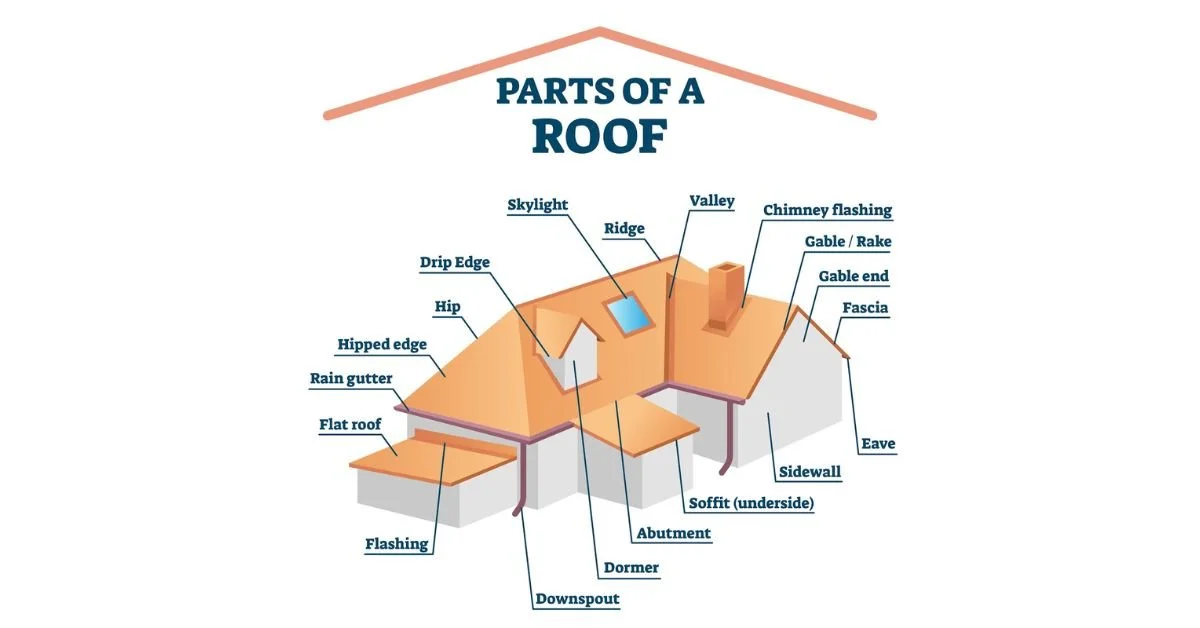
We mentioned the "drip edge" in the table above, but let’s talk about why it’s your roof’s best friend. A drip edge is a non-corrosive metal flashing that we install along the perimeter of the roof deck before the shingles go down.
Think of the drip edge as a structural support shelf for your shingles. It does two main things:
Support: It holds that shingle overhang up so it doesn't droop into the gutter over time.
Projection: It features a small metal lip that physically "kicks" the water away from your fascia board.
Based on the questions we see from homeowners, there is a lot of confusion about "shingle overhang on rake edge" versus eaves. The rake is the sloped side of your roof (the triangle part of the gable). While you don't have gutters there, you still need a drip edge and a precise overhang to prevent rain from blowing sideways into your roof decking.
If you aren't sure if your current roof has proper drip edges, it might be time for a professional Roof Inspection. We can spot these issues from the ground or with a quick ladder check.
The Risks of "Incorrect Shingle Overhang"
We have fixed plenty of roofs in Villa Ridge, Fenton, and Eureka where the previous installer just eyeballed the edge. The results of incorrect shingle overhang are usually expensive to fix if left too long.
1. The "Short" Shingle (Water Damage)
When the shingle is flush with the wood, water wicks behind the gutter.
The Result: Rotted fascia boards, stained soffits, and even water getting into the wall cavity. Damp wood is also a dinner bell for carpenter ants and termites.
2. The "Long" Shingle (Wind Damage)
If you have an inch or more of overhang, you have created a wind sail.
The Result: During those fierce Missouri thunderstorms, the wind catches that lip and tears the shingles loose. Once the edge lifts, the wind can get underneath the rest of the roof, leading to a "zipper effect" where large sections of shingles blow off.
If you’ve noticed shingles in your yard after a storm, this might be the culprit. Our team specializes in Storm Damage Restoration and can help you assess if your perimeter failed.
DIY vs Pro: Can You Fix This Yourself?
We respect the DIY spirit! But the roof edge is one of the hardest places to work safely. You are leaning away from the ladder, trying to cut thick asphalt shingles in a perfectly straight line.
Professional roofers use specific gauges and chalk lines to ensure that the 3/4 inch maximum isn't exceeded. We also ensure the starter strip—the layer under the first shingle—is positioned correctly to seal the edge. Failure to follow these precise measurements can often void the manufacturer's warranty, leaving you unprotected.
If you are planning a full Roof Replacement, this is the best time to correct any overhang issues. We can strip the old layers, install a fresh metal drip edge, and ensure the new shingles are laid with laser precision.
Frequently Asked Questions (FAQs)
Q: How far should shingles overhang into the gutter specifically?
A: Ideally, the shingle should sit over the gutter by about 1/2 to 3/4 of an inch. This ensures the water drops into the center of the trough, not behind it and not over the front edge.
Q: My shingles are curling over the edge. Is that bad?
A: Yes. If they are curling down into the gutter, they were likely installed with too much overhang and gravity is pulling them down. This can block water flow and trap debris.
Q: What if I don't have a drip edge?
A: If your home is older and lacks a drip edge, the overhang becomes even more critical. You generally need a slightly longer overhang (up to 3/4 inch) to ensure water clears the wood, but we highly recommend retrofitting a drip edge if possible to meet modern building codes.
Let's Keep Your Home Dry
Your roof is a system, and the edge is its first line of defense. Don't let a fraction of an inch compromise your home's safety.
At Utz Roofing, we believe in doing it right the first time. We are your neighbors in Villa Ridge, and we want your roof to last as long as possible.
If you are worried about your shingle overhang, or if you just want peace of mind before the next storm season hits, give us a call. We’re happy to come out, take a look, and give you an honest assessment.
Contact Utz Roofing Today to schedule your inspection.